Why Version Control Exists: The Pendrive Problem
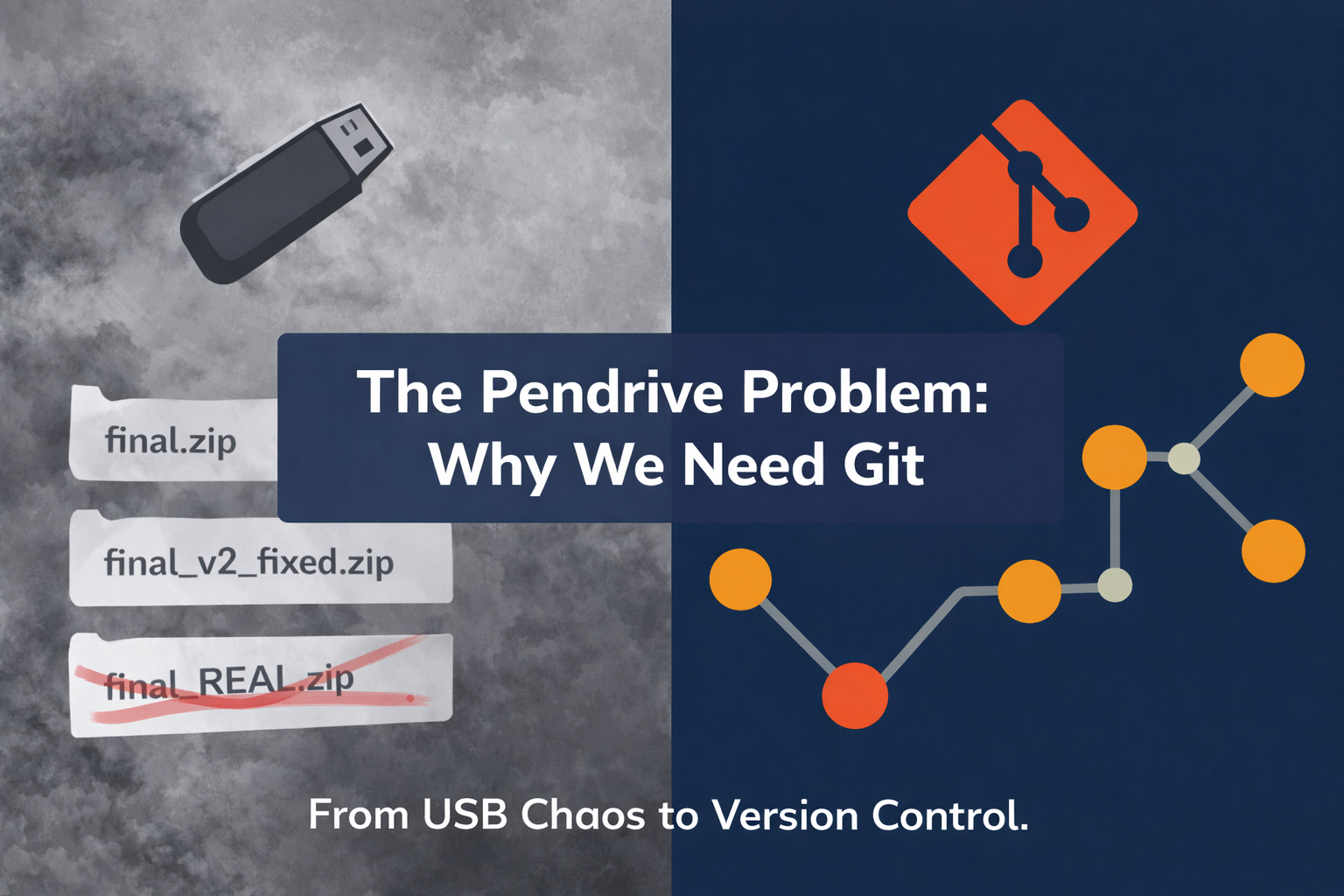
Introduction: A Story Every Developer Has Lived
Imagine this scenario. It’s 2010 (or maybe last week, if you’re unlucky).
You are working on a university project with your friend, Rahul. The deadline is tomorrow morning. You finish your part of the code, copy the folder onto a USB drive, hand it to Rahul, and say those famous last words:
"Bro, this is the final code. Just add your part and we are done."
Two hours later, Rahul calls you in a panic. "I updated it… but I think your login page is missing. Also, nothing works anymore."
Congratulations. You have just experienced The Pendrive Problem.
Before modern tools like Git, software development was messy, fragile, and risky. If you are learning to code today, it’s hard to appreciate how good we have it. Let’s look at why Version Control isn’t just a fancy tool—it’s the only reason the modern internet survives.
The Dark Ages: How We Used to Work
Before Version Control Systems (VCS) became standard, "collaboration" was basically just hope and a prayer.
The "Pendrive Workflow"
We didn't have repositories. We had physical media.
Developer A writes code.
Developer A copies the folder to a Pendrive.
Developer A walks over to Developer B (or emails a ZIP file).
Developer B tries to edit the files without overwriting Developer A's work.
Developer B hands the Pendrive back.
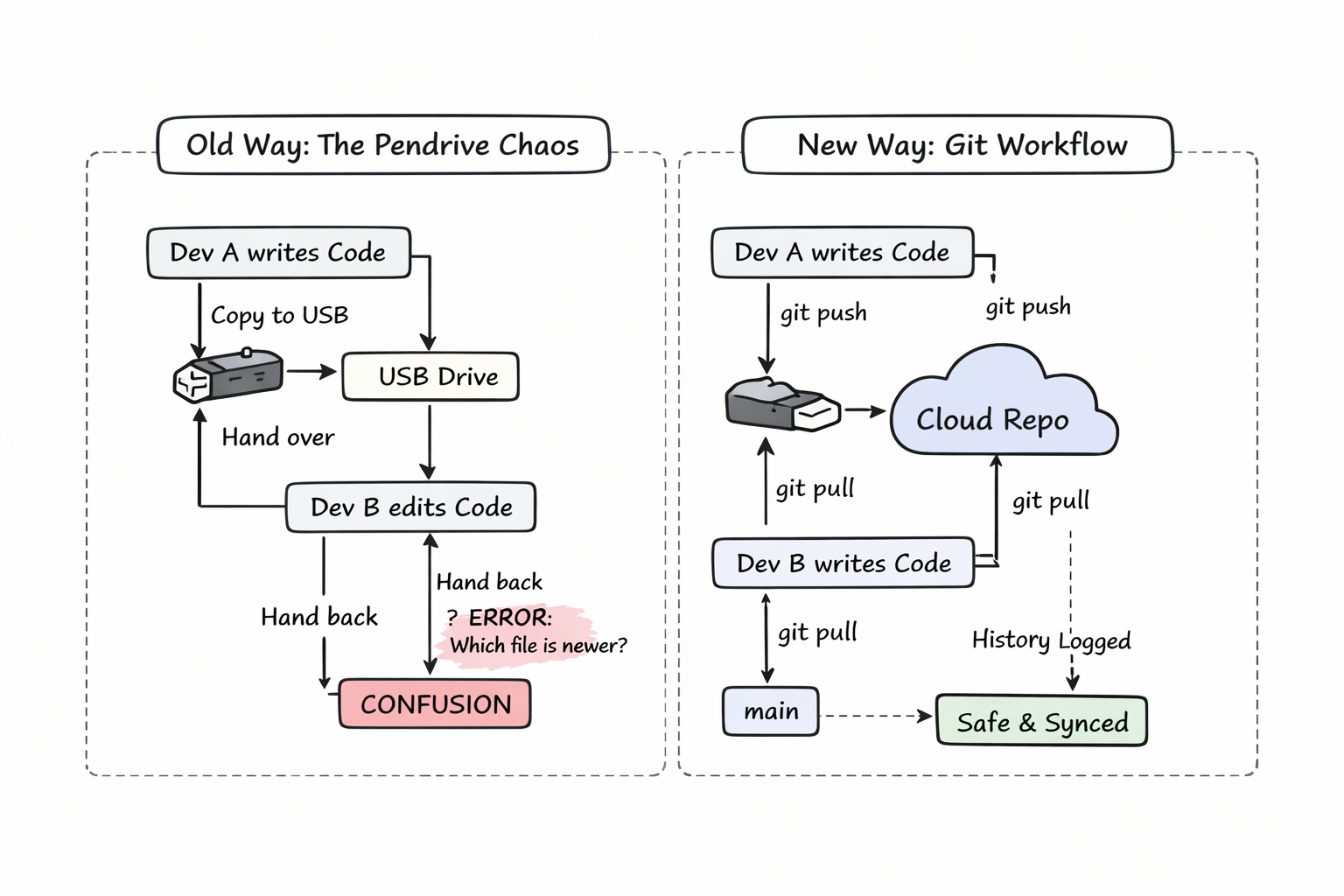
It sounds ridiculous now, but this was reality. And it led to the most terrifying file structure known to man:
project/
 ├── website/
 ├── website_final/
 ├── website_final_v2/
 ├── website_REALLY_final_fixed/
 └── website_FINAL_do_not_touch_Use_This_One/
The Chaos: Why This Didn't Work
This manual way of sharing code created massive problems that killed countless projects.
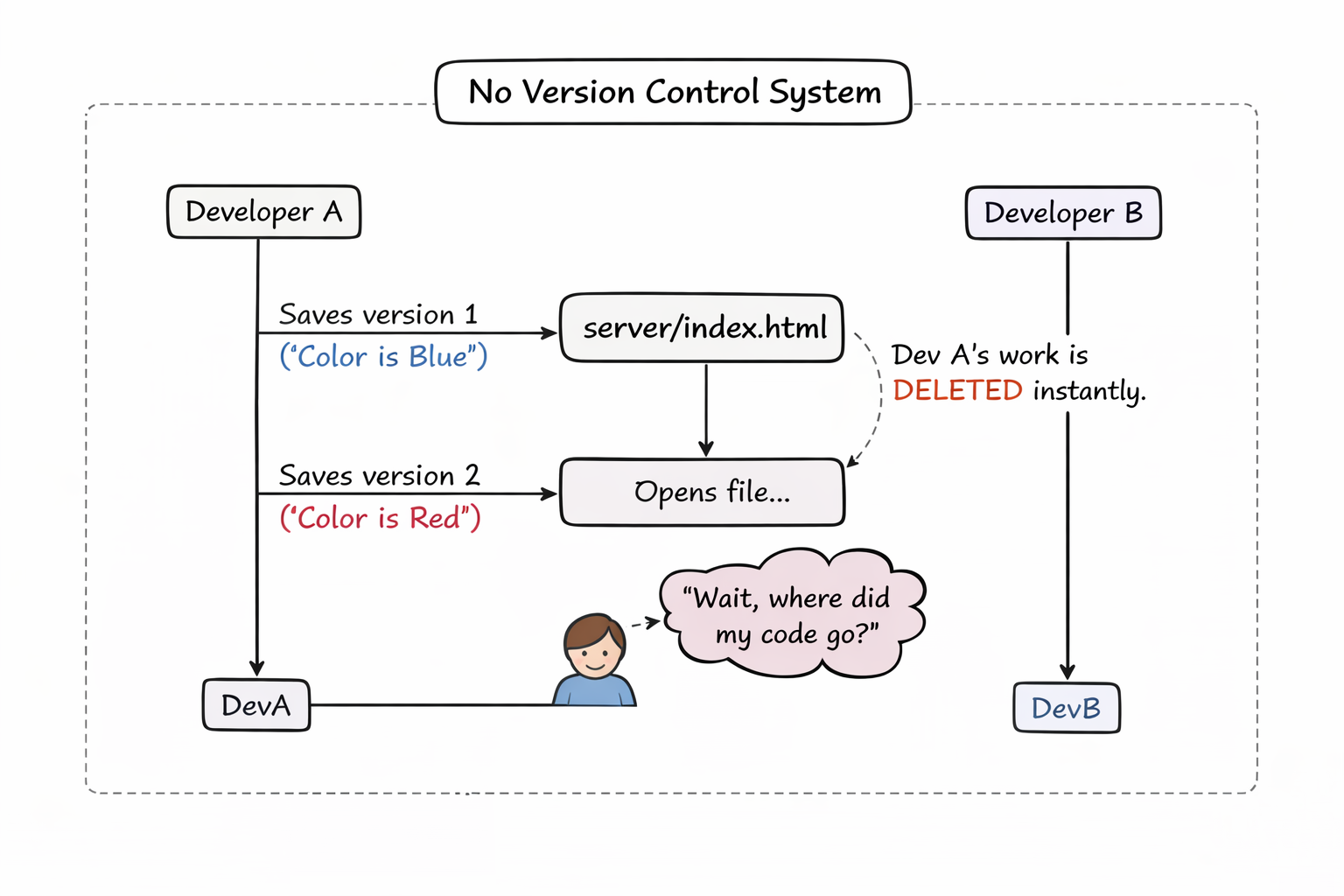
1. The "Overwrite" Nightmare
If two people edited the index.html file at the same time, the person who saved the file last erased the other person's work. There was no "merge conflict" warning. Just data loss.
2. No Time Machine
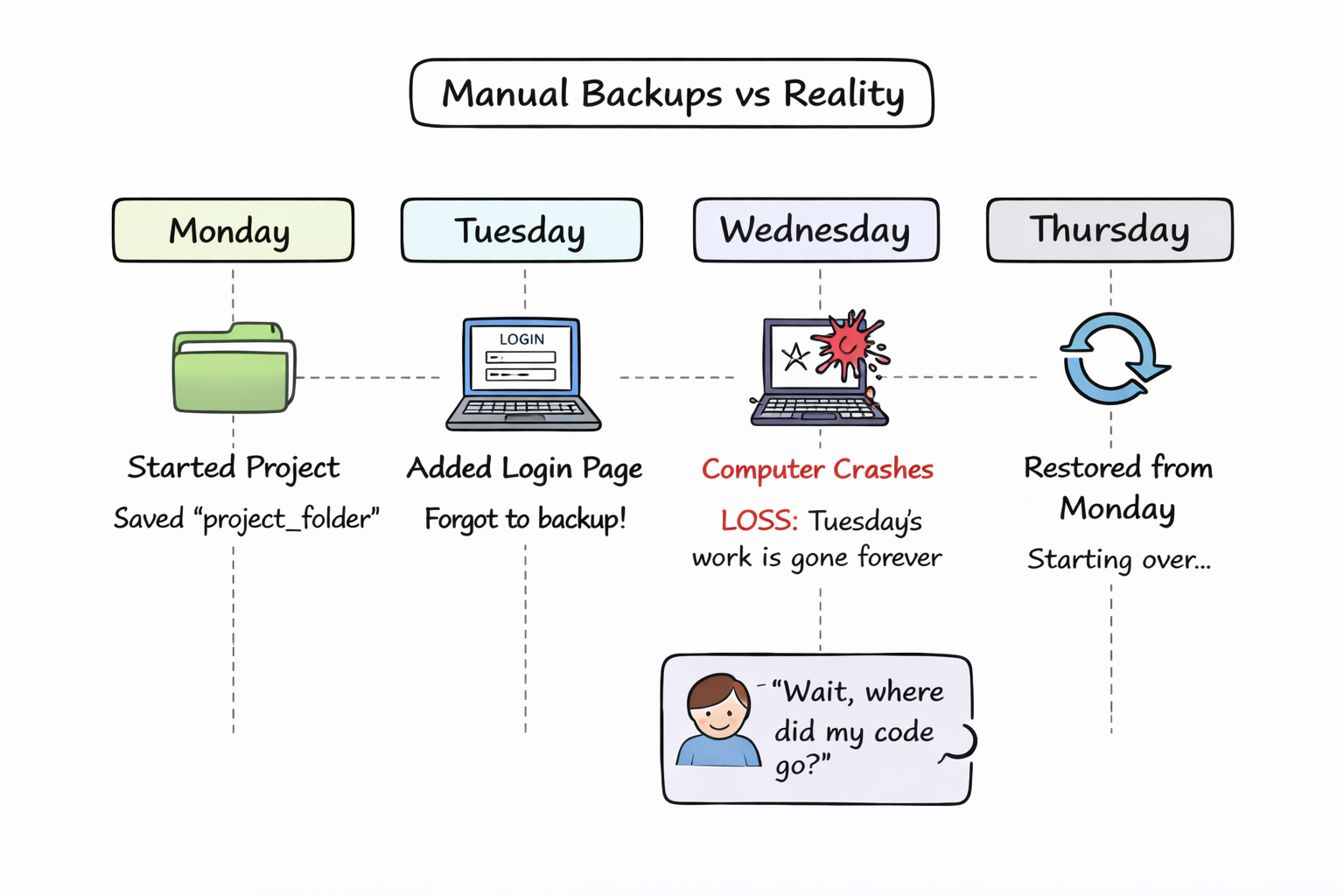
If you decided to delete a feature on Tuesday, but realized on Friday that you actually needed it back, you were out of luck. Unless you had a folder named backup_tuesday.zip, that code was gone forever. There was no history, no "Undo" button for the whole project.
3. The Blame Game
When the code inevitably broke, there was no way to prove who broke it. Was it the changes I made yesterday? Was it the file Rahul added an hour ago? Without a log of changes, debugging was just guessing.
Enter the Hero: Version Control (VCS)
This chaos made one thing clear: Software needed a time machine.
Version Control Systems were created to solve the Pendrive Problem once and for all. They introduced a system that:
Tracks every change: It records exactly what line changed, who changed it, and when.
Prevents Overwriting: If two people change the same file, the system pauses and asks you to fix it safely (Merge Conflicts).
Allows Parallel Universes: You can work on a new feature without breaking the main code (Branching).
The Simple Definition
Version Control is a system that records changes to a file or set of files over time so that you can recall specific versions later.
Think of it as a super-powered "Save As" button that manages itself.
How Git Changed the Game
While there were older systems, Git (created by Linus Torvalds) changed everything by being Distributed.
In the old days, if the central server crashed, everyone lost their work. With Git, every developer has a full backup of the entire project history on their own laptop.
Version Control is the concept (the "what").
Git is the tool (the "how").
Final Thoughts
The "Pendrive Problem" taught the software world a painful lesson: Manual code sharing does not scale.
If you are just starting your coding journey, Git might feel like a chore. You might wonder why you have to type git add and git commit for a simple project.
Just remember the alternative: A pocket full of USB drives, a folder named final_v2_broken, and a 3 AM phone call telling you that your code is gone.
Version control transformed development from chaos to clarity. It’s not just a tool; it’s your safety net.